Narrative

Stablecoins

Dollar and non-dollar denominated tokens used for payments, settlement and collateral, and the regulation shaping them.

44 intelligence items in the last 7 days

Assets in this narrative
Intelligence

30 items

CoinDesk34 d agofactual news
Tokenization stocks slip as SEC delay puts 'speed bump' in crypto’s Wall Street push

Shares of Bullish, Coinbase and Circle declined Friday after an SEC delay described as a regulatory setback for tokenization.

Why it matters

The declines suggest regulatory timing may affect investor expectations for crypto and tokenization companies’ expansion on Wall Street.

CRYPTD interpretation — not financial advice

CoinDesk34 d agofactual news
RedotPay said to put $1 billion U.S. IPO plan on hold: Bloomberg

Bloomberg reported that stablecoin payments company RedotPay put a planned $1 billion U.S. IPO on hold. A company spokesperson declined to comment on any IPO plans.

Why it matters

A delay may suggest uncertainty around public-market timing for stablecoin payment businesses, although RedotPay has not confirmed the reported plan.

CRYPTD interpretation — not financial advice
Cointelegraph34 d agoanalysis
Bitcoin price drops to $62.5K as trader warns weekly close may spark more losses

Bitcoin fell to $62,500 and moved toward new August lows despite positive U.S. inflation trends, while U.S. equities remained near record highs. A trader warned the weekly close could precede further losses.

Why it matters

Bitcoin’s divergence from equities and inflation signals may suggest crypto-specific weakness, while the trader’s warning remains speculative.

CRYPTD interpretation — not financial advice
Decrypt34 d agocommentary
Morning Minute: Tether Finally Gets An Audit

Decrypt reports that Tether completed an audit and says the outcome addressed a longstanding criticism of the leading stablecoin company.

Why it matters

An audit may improve transparency around Tether and address concerns associated with scrutiny of stablecoin reserves.

CRYPTD interpretation — not financial advice

The Block34 d agofactual news
‘Honestly, I don’t care’: Tether CEO dismisses critics following first KPMG audit

Tether's CEO dismissed critics following the company's first KPMG audit. A source said Tether does not publicly release audited statements because it is privately held.

Why it matters

The dispute may keep attention on transparency and disclosure standards for major stablecoin issuers.

CRYPTD interpretation — not financial advice

Bitcoin Magazine35 d agofactual news
Tether Finally Completes Independent Audit of Reserves With KPMG

Tether completed an independent audit of its reserves with KPMG after years of difficulty securing a Big Four accounting firm for the work, Bitcoin Magazine reports.

Why it matters

The audit may strengthen transparency around Tether’s reserves and address a longstanding area of scrutiny for the stablecoin issuer.

CRYPTD interpretation — not financial advice
Cointelegraph33 d agoregulation
Galaxy lowers CLARITY Act odds to 10%

Galaxy lowered its estimated odds of the CLARITY Act advancing to 10%, citing unresolved issues involving ethics, stablecoin yield and developer protections, as well as a narrow Senate window when lawmakers return in September.

Why it matters

The reduced estimate may suggest substantial legislative uncertainty remains around US crypto market-structure rules and their prospects in the Senate.

CRYPTD interpretation — not financial advice
Decrypt33 d agoregulation
Trump-Linked World Liberty Gets Conditional Bank Charter for USD1 Stablecoin

Trump-linked World Liberty received a conditional bank charter for its proposed World Liberty Trust Company, which would assume issuance of the USD1 stablecoin from BitGo.

Why it matters

The conditional charter may indicate progress toward bringing USD1 issuance under a dedicated banking entity, subject to the conditions attached to the approval.

CRYPTD interpretation — not financial advice

CoinDesk32 d agoanalysis
The stablecoin yield clash that won't go away has banks, crypto battling over tradition

CoinDesk reports an ongoing dispute between banks and the crypto sector over stablecoin yields. Bankers argue that keeping customers in lower-yield deposits supports the traditional financial system, and the excerpt says their position is gaining ground.

Why it matters

The dispute may shape how stablecoin rewards are treated and suggests growing support for arguments prioritizing traditional bank funding and financial-system stability.

CRYPTD interpretation — not financial advice
CoinDesk31 d agoanalysis
Coinbase-Circle USDC collaboration, FOMC minutes, oil price: Crypto Week Ahead

CoinDesk previews the crypto calendar for the week beginning Aug. 17, highlighting Coinbase and Circle's USDC collaboration, upcoming FOMC minutes and oil prices.

Why it matters

These corporate and macroeconomic developments may shape market expectations around stablecoins and broader crypto conditions during the week.

CRYPTD interpretation — not financial advice
Cointelegraph32 d agofactual news
BitMart account demands founder explain funds status, Xia calls claims ‘fabricated’

BitMart’s Chinese-language X account demanded that founder Sheldon Xia explain the status of funds and provide a repayment plan by Aug. 19. Xia rejected claims of blocked withdrawals and unpaid salaries as “fabricated rumors.”

Why it matters

The conflicting statements may indicate internal uncertainty around BitMart’s operations and liabilities, potentially increasing scrutiny of the exchange’s transparency.

CRYPTD interpretation — not financial advice

CoinDesk31 d agoregulation
U.S. Treasury Department proposes GENIUS Act stablecoin rule

The U.S. Treasury proposed a rule under the GENIUS Act that would establish core definitions and jurisdictions for the stablecoin law Congress completed last year.

Why it matters

The proposal may clarify how the stablecoin law is interpreted and which authorities oversee its implementation.

CRYPTD interpretation — not financial advice

Cointelegraph31 d agoregulation
US Treasury moves forward with rules on GENIUS Act after July deadline

The US Treasury is advancing rules for the GENIUS Act after a July deadline. The stablecoin law is scheduled to take effect in January 2027, potentially before government agencies finalize regulations.

Why it matters

The timing may create implementation uncertainty for stablecoin issuers and other affected entities ahead of the law’s scheduled effective date.

CRYPTD interpretation — not financial advice
The Block31 d agoregulation
US Treasury seeks public comment on GENIUS Act stablecoin rules

The US Treasury is seeking public comments on GENIUS Act stablecoin rules. Under the law, entities generally need an appropriate federal or state license to issue payment stablecoins in the US.

Why it matters

The rulemaking may shape licensing expectations and compliance obligations for payment stablecoin issuers operating in the United States.

CRYPTD interpretation — not financial advice

Decrypt31 d agoregulation
Treasury Proposes Rules Defining Who Can Legally Sell Stablecoins in US

The US Treasury has proposed rules defining which entities may legally sell stablecoins to US customers. Exchanges and other crypto platforms would face new restrictions beginning in 2027.

Why it matters

The proposal may reshape stablecoin access and compliance obligations for exchanges and other crypto platforms serving US customers.

CRYPTD interpretation — not financial advice
The Block31 d agofactual news
Robinhood Chain TVL surges 45% in August as tokenized RWAs lose ground

Robinhood Chain’s total value locked rose 45% in August while tokenized real-world assets lost ground. Stablecoin market capitalization on the chain reached $640 million, with most of it coming from USDe.

Why it matters

The figures may suggest that stablecoins, particularly USDe, are becoming a larger driver of activity on Robinhood Chain than tokenized real-world assets.

CRYPTD interpretation — not financial advice

Cointelegraph31 d agofactual news
South Korea’s Jeonbuk Bank taps Ripple for cross-border payments

Ripple is bringing its cross-border payments platform to South Korea’s Jeonbuk Bank. The launch status and settlement asset have not been disclosed.

Why it matters

The arrangement may signal growing bank interest in blockchain-based cross-border payment infrastructure, though the undisclosed launch and settlement details limit assessment of its scope.

CRYPTD interpretation — not financial advice

CoinDesk31 d agofactual news
XRP slips below $1 even as a Korean regional bank adopts Ripple Payments

XRP fell below $1 as Jeonbuk Bank adopted Ripple's round-the-clock cross-border payment service for business remittances. It remains unclear whether transfers will use XRP or the RLUSD stablecoin.

Why it matters

The adoption may broaden Ripple's payments footprint, but uncertainty over the settlement asset limits what it suggests about direct demand for XRP or RLUSD.

CRYPTD interpretation — not financial advice

The Block31 d agofactual news
Ripple partners with South Korea’s Jeonbuk Bank for cross-border payments

Ripple partnered with South Korea’s Jeonbuk Bank for cross-border payments. The collaboration is Ripple’s third Korean partnership this year, after agreements with Kyobo Life Insurance and Kbank.

Why it matters

The partnership may suggest Ripple is expanding its institutional presence in South Korea’s payments sector.

CRYPTD interpretation — not financial advice

CoinDesk30 d agofactual news
Visa looking for new stablecoin settlement partner after BVNK sale to Mastercard

Visa is seeking a new stablecoin settlement partner following BVNK’s sale to Mastercard. Its request for product indicates that the partner must support a range of stablecoins.

Why it matters

The search suggests stablecoin settlement remains relevant to Visa’s payments strategy despite the change in ownership of its previous partner.

CRYPTD interpretation — not financial advice

Cointelegraph30 d agofactual news
MoonPay adds Cash App Pay for crypto purchases by US customers

MoonPay has added Cash App Pay as a funding option for crypto purchases by eligible US users. The payments firm is also expanding beyond its core onramp business.

Why it matters

The integration may make crypto purchases more accessible to eligible Cash App users and suggests MoonPay is broadening its payments offering.

CRYPTD interpretation — not financial advice

CoinDesk30 d agofactual news
Cash App's crypto support expands beyond bitcoin and USDC via MoonPay

Eligible Cash App users will be able to spend their balances on MoonPay-listed digital assets, including ether, solana and USDT, expanding access beyond bitcoin and USDC.

Why it matters

The MoonPay integration may broaden the range of crypto assets accessible through Cash App and reduce friction for eligible users funding purchases.

CRYPTD interpretation — not financial advice

Cointelegraph30 d agofactual news
Toyota Finance opens tokenized bonds to retail investors via mobile payment app

Toyota Finance has opened a 1 billion yen tokenized bond offering to retail investors, who can apply through Toyota’s payment app without a securities account and receive app-based perks.

Why it matters

The offering may suggest tokenization and mobile payments are making bond access more convenient for retail investors.

CRYPTD interpretation — not financial advice

CoinDesk30 d agofactual news
HashKey taps Hong Kong's first regulated stablecoin to settle insurance and trade deals

HashKey is using Hong Kong’s first regulated HKD-pegged stablecoin to settle insurance and trade transactions following institutional trials, targeting activity in the city’s $49 billion trade corridor with the United Arab Emirates.

Why it matters

The deployment may indicate growing institutional use of regulated stablecoins for cross-border trade and insurance settlement.

CRYPTD interpretation — not financial advice

CoinDesk30 d agofactual news
Why the Trump-backed crypto venture is distancing itself from Hong Kong AI aggregator WorldClaw

World Liberty Financial says Hong Kong AI aggregator WorldClaw is independent and uses USD1 as a payment rail. WLFI did not disclose whether it holds equity, financing, revenue-sharing or other economic interests in WorldClaw.

Why it matters

The response may leave uncertainty about the firms’ economic relationship and highlights questions around transparency in USD1-linked commercial arrangements.

CRYPTD interpretation — not financial advice

Decrypt30 d agofactual news
Trump Family Crypto Firm Tied to Chinese AI Models US Government Called a Security Risk

WorldClaw accepts World Liberty’s USD1 stablecoin and offers AI models from Chinese companies subject to U.S. national security restrictions, according to Decrypt.

Why it matters

The reported connection may increase scrutiny of USD1’s integrations and their exposure to U.S. security restrictions.

CRYPTD interpretation — not financial advice

CoinDesk30 d agofactual news
Wyoming joins $15 billion LayerZero exodus with state stablecoin move

Wyoming has replaced blockchain infrastructure for its state stablecoin on security grounds, reportedly marking the first public instance of a U.S. government entity doing so for that reason.

Why it matters

The move may influence how public-sector stablecoin projects evaluate blockchain security and infrastructure providers.

CRYPTD interpretation — not financial advice
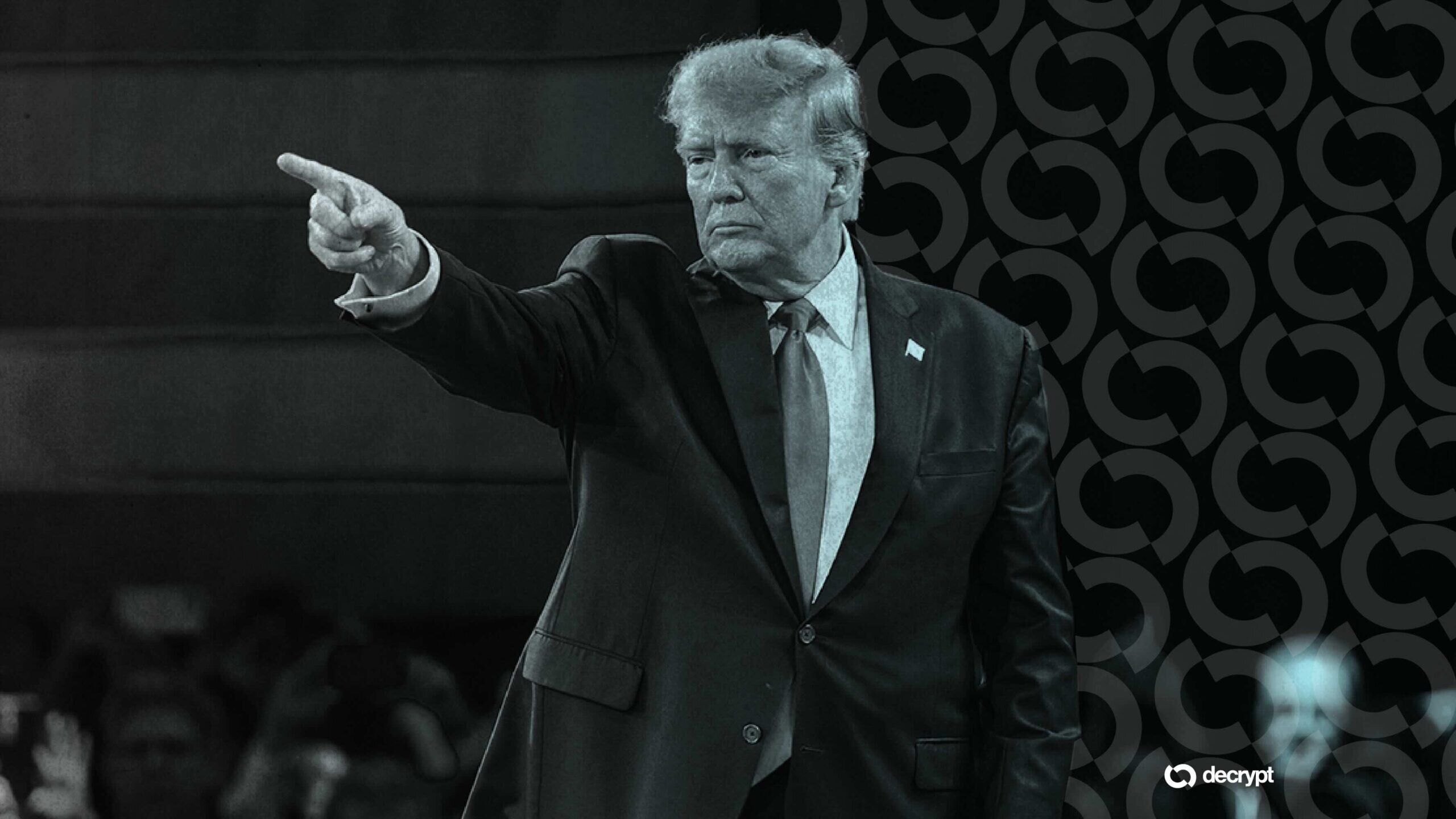
The Block30 d agoregulation
White House crypto adviser Patrick Witt says he is ‘optimistic and bullish’ on Clarity Act as stablecoin fight resurfaces

White House crypto adviser Patrick Witt said he is “optimistic and bullish” ahead of the first planned vote on the sweeping Clarity Act, as debate over stablecoins resurfaces.

Why it matters

The adviser’s remarks may signal White House confidence in the legislation’s prospects, although renewed disagreement over stablecoins could remain relevant to its advancement.

CRYPTD interpretation — not financial advice

CoinDesk30 d agoregulation
U.S. accounting-standards group proposes way to see stablecoins as 'cash equivalent'

The Financial Accounting Standards Board proposed that certain stablecoins could be treated as cash equivalents under U.S. accounting standards.

Why it matters

Cash-equivalent treatment may simplify how qualifying stablecoins are reported in financial statements and suggests growing consideration of their role in conventional accounting.

CRYPTD interpretation — not financial advice